
What If Everything We've Been Told About Hearing Loss Is Wrong?
Researchers found one small detail that turns everything we thought we knew about hearing loss on its head. Now they're rushing to tell everyone over 60…
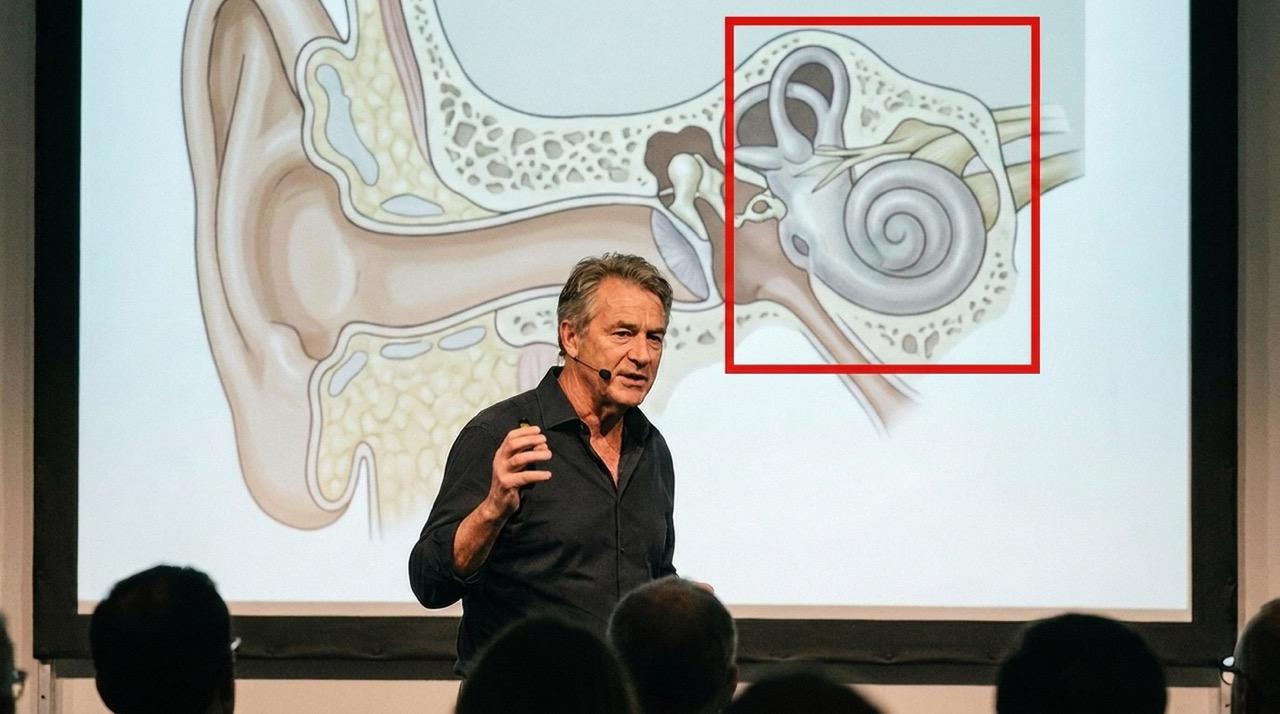
QUICK TEST: If you find yourself asking people to repeat themselves, turning up the TV, or feeling mentally exhausted after every conversation — you need to read this immediately.
Think for a moment about how far medicine has come.
In the last 20 to 30 years, we've found treatments for so many conditions.
Cancer survival rates are way up.
We can fix failing eyesight with a simple laser surgery.
Scientists are even working on regrowing enamel to restore our teeth.
It's amazing what we can do now.
But not with hearing.
Doesn't that strike you as strange?
When your hearing starts to go, they just tell you, "Sorry, it's part of getting old."
Are we really going to live in a world where seniors have perfect eyesight and perfect teeth… but still can't hear?
For years, that's what everyone believed.
New research says otherwise.
So What Finally Changed?
Hi, my name is Dr. David Rennard, and I'm an audiologist from Chicago.
For the last 29 years, I've treated over 11,000 patients with hearing problems.
And too many of them kept coming back to me frustrated.
They'd spent thousands on hearing aids. And they still couldn't follow a conversation at dinner.
Many even told me their hearing kept getting worse.
I didn't have a real answer for them…
Not until earlier last year, when I finally found something that's already helped 831 of my own patients hear clearly again.
Without a single hearing aid.
I've watched patients go from asking their grandkids to repeat everything… to hearing every word the first time.
From nodding along at the dinner table… to being right in the middle of the conversation again.
From cranking the TV up louder and louder… to watching it at a normal volume like everyone else.
Not with the captions on. Not straining to keep up. Just… hearing.
And it all comes down to one thing your doctor never explained…
How Does Your Hearing Actually Work?
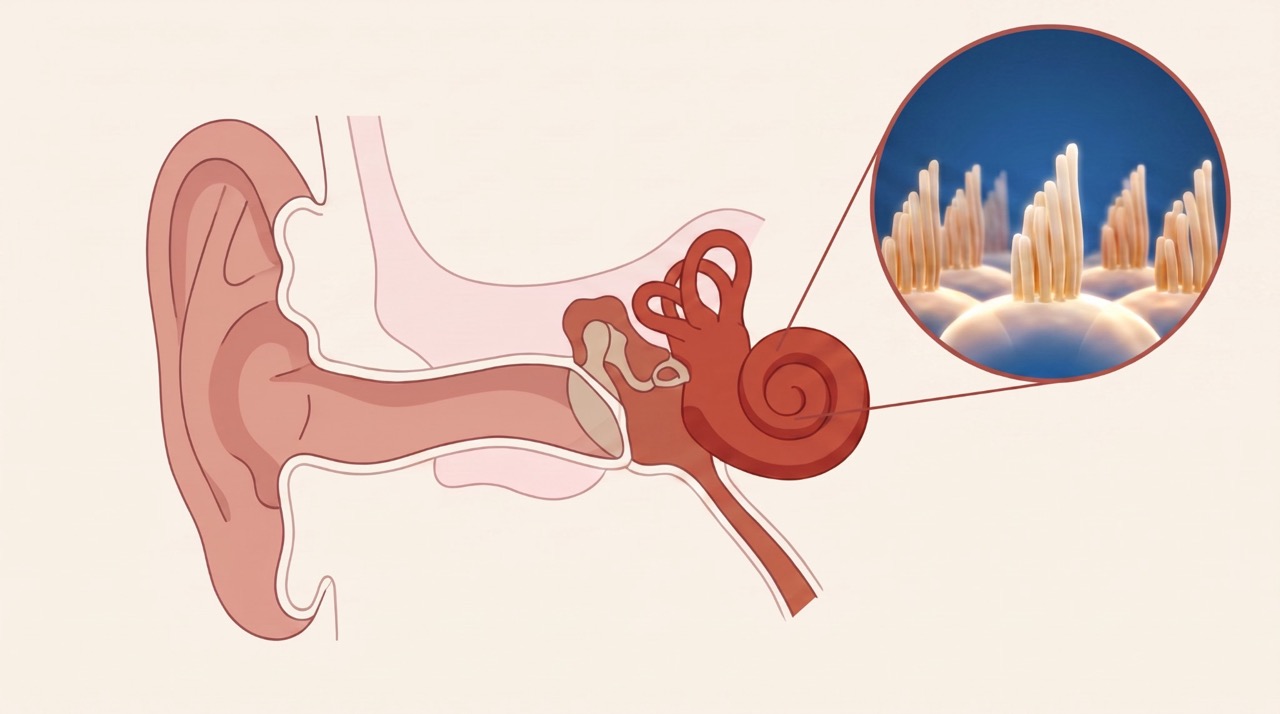
Deep inside your ear is a tiny, spiral-shaped chamber called the cochlea.
Inside it are thousands of microscopic hair cells.
These cells have one job: turning the sound that comes into your ear into signals your brain can understand.
They're the translators.
Your spouse's voice. Your grandchild laughing. Your name called across a room.
Everything you hear passes through them.
But here's what most people are never told…
These hair cells are some of the hungriest cells in your whole body.
They're working around the clock, and that takes an enormous amount of energy.
But as you get older, your body produces less of that energy.
And the little hair cells are the first to feel it.
They stop getting the fuel they need. So they can't do their job the way they used to.
But what happens to them next is the part almost everyone gets wrong.
Is Your Hearing Really Gone for Good?

For decades, doctors saw these struggling cells and assumed they had died.
And since these cells aren't genetically programmed to grow back, that meant your hearing was gone for good.
That's what everyone believed.
But in 2021, researchers at the German Institute of Audiology discovered something that changed everything.
Most of the hair cells they'd presumed were dead… weren't dead at all.
They were just damaged. Drained of energy, but still alive.
Think of it like a flashlight with a dying battery.
It still switches on. But the beam is weak and flickering.
Not because the flashlight is broken. Just because it's running low on power.
That's exactly what's happening inside your ear.
Your hair cells are still there. Still alive. Still trying to do their job.
They're just running on a weak charge, sending your brain a faint, flickering signal.
That's why you can still hear that someone is talking… but the words come out muddy.
You catch the sound. You just lose the meaning.
So if you've been quietly afraid your hearing is simply too far gone…
For the vast majority of people over 60, it isn't.
These cells don't die the moment they run low. They hold on.
Which means yours are still in there. Just waiting for their energy back.
Why Don't Hearing Aids Solve It?
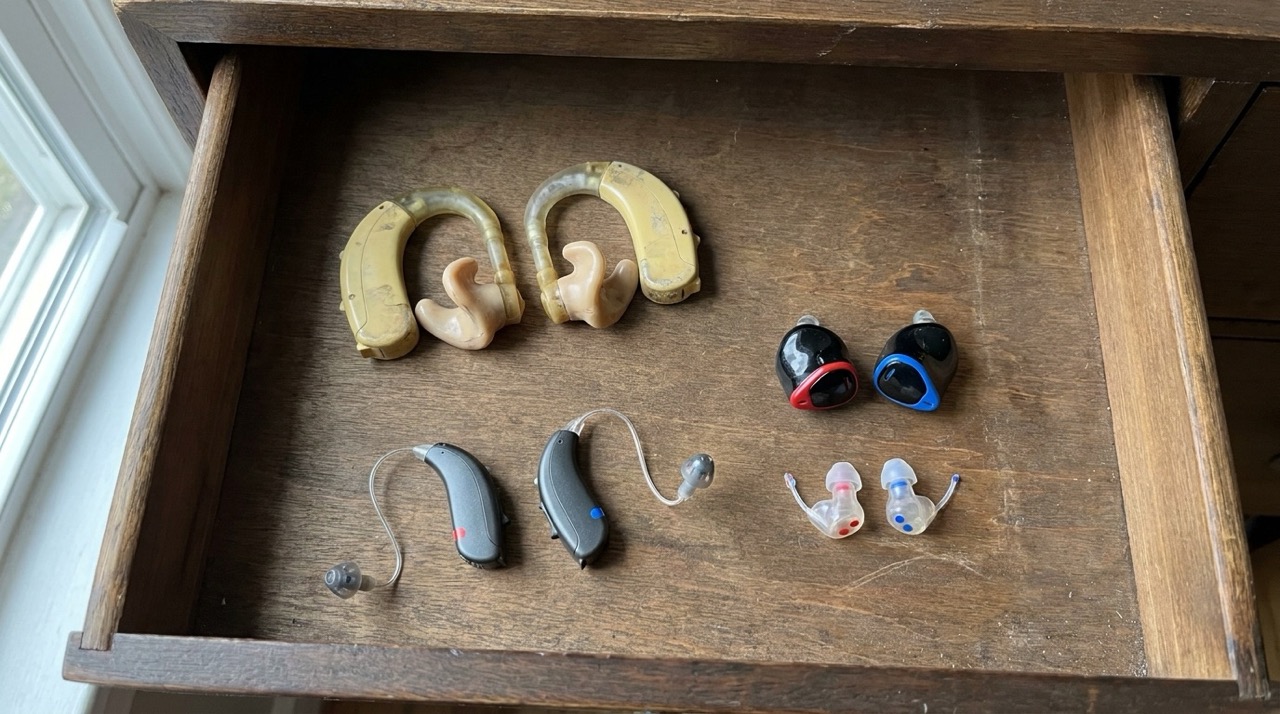
A hearing aid does one thing. It makes sound louder.
And for some people, in some situations, that can help.
But think about what it's actually doing.
It turns up the volume on cells that are already worn down and low on energy.
It doesn't repair a single one of them. It was never built to.
So the voice you're trying to hear gets buried under the clatter of dishes and everyone else at the table.
That's why so many people wear hearing aids and still leave dinner exhausted.
But it gets worse…
Loud noise is one of the things that damages these cells in the first place.
So a device that only makes things louder isn't just failing to fix the problem. It's wearing them down faster.
Turning up the volume was never the answer.
The answer had to reach the cells themselves, and give them back the energy they'd lost.
What Can Actually Bring These Cells Back?
The answer came from an unexpected place. And it isn't new.
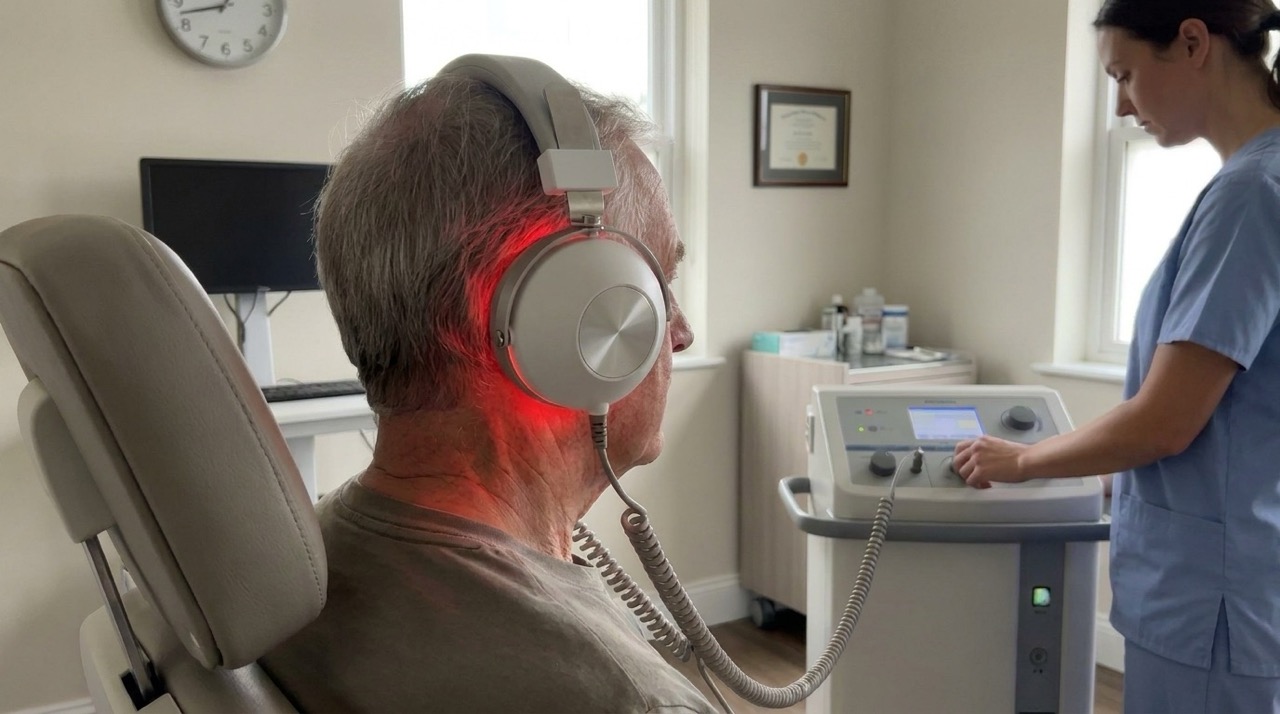
Red light.
But not just any light. One precise wavelength: 650 nanometers.
NASA developed it decades ago for cellular repair. Hospitals use it today for wound healing, nerve regeneration, and recovery after surgery.
The question was whether it could do the same for the worn-down cells in your ears.
In 2023, researchers at University of Texas put it to the test in a clinical trial on age-related hearing loss.
714 participants. 8 weeks. The precise 650nm wavelength.
Here's what they found:
- 82% had measurable hearing improvement by week 4.
- Hearing improved by an average of 19.2 dB (vs. -0.3 dB in control).
- Ability to understand words jumped from 36% to 82%.
- 73% said they felt more socially connected and less left out.
The results were hard to believe.
At this exact wavelength, red light reaches 1.4 inches deep into the ear, right to the damaged cells.
And it delivers the one thing they've been missing: energy.
In fact, this specific wavelength has been shown to boost the energy these cells produce by up to 200%.
Cells that had gone quiet started firing again.
So Why Isn't Everyone Doing This?

For the past year, I'd been using this same red light therapy with my own patients, right there in my clinic.
And I watched it work.
Men and women who'd already given up were suddenly following conversations again.
There was just one problem.
To get results, they had to come in 5 to 7 times a week.
The driving. The appointments. The cost.
For most people, that's just not realistic.
But I knew I couldn't keep this to just the patients who could make it in.
Because I was tired of watching good people miss out.
Missing the punchline everyone else at the table laughed at.
Missing their grandchild's voice on the other end of the phone.
Missing the small moments that make up a life.
So I set out to shrink that same clinical technology down into something anyone could use at home.
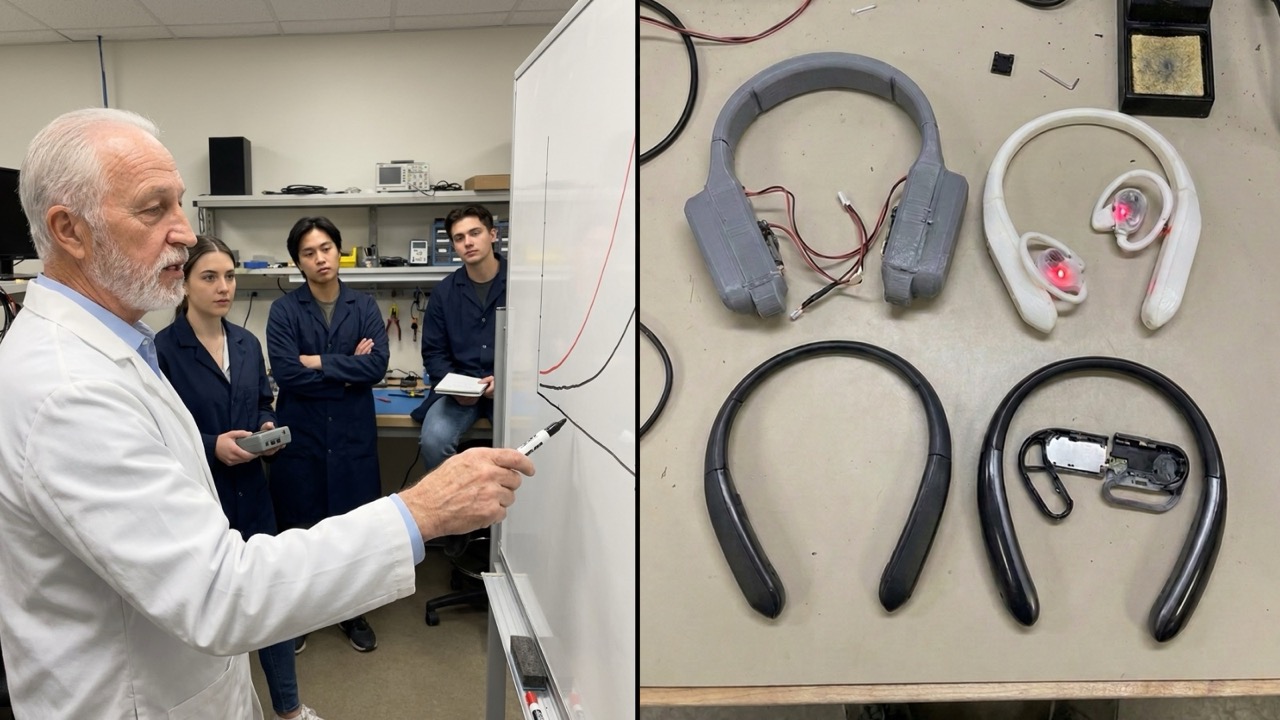
And let me tell you, it wasn't easy.
I teamed up with a group of biomedical engineers, and for the next 14 months, we practically lived in the lab.
The early prototypes were too weak. Others couldn't get the light deep enough to matter.
It took 9 versions before I had something I'd give to my own patients.
But we got there.
And since then, it's helped over 41,000 people across the country start hearing clearly again.
Finally, a Way to Recharge Your Hearing at Home
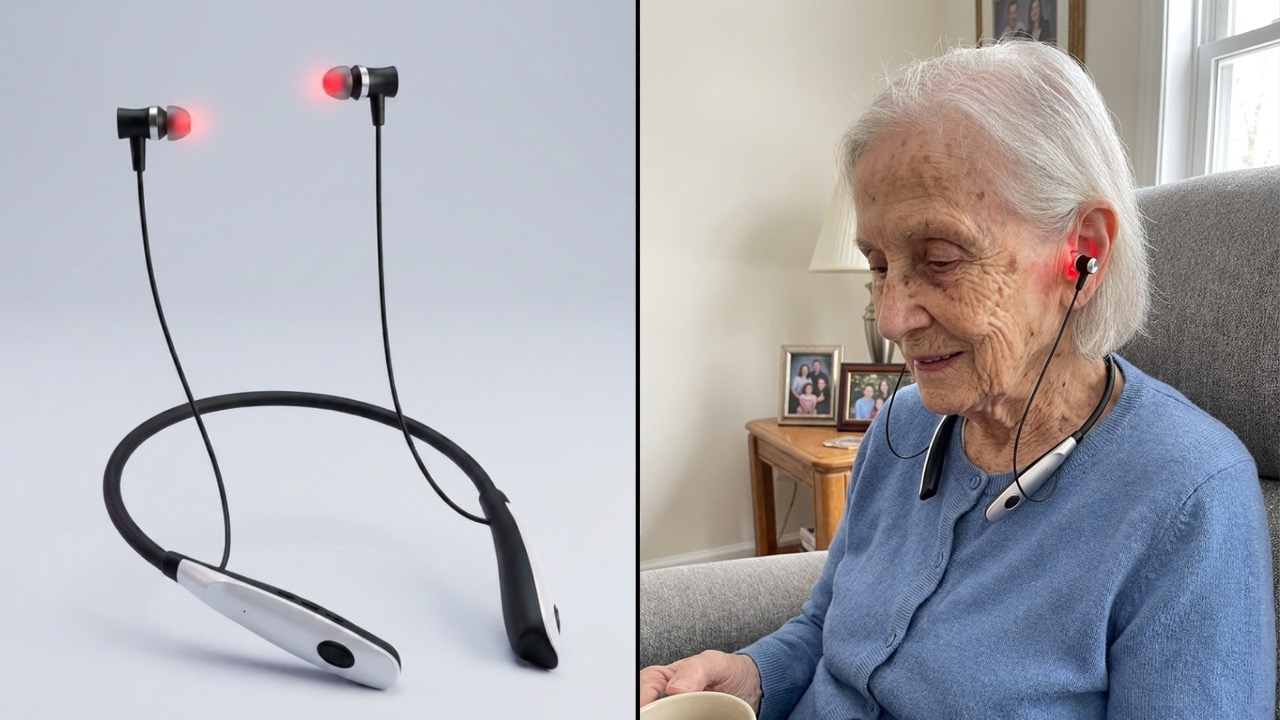
For the first time, you can get this same clinically proven red light treatment at home, on your own schedule.
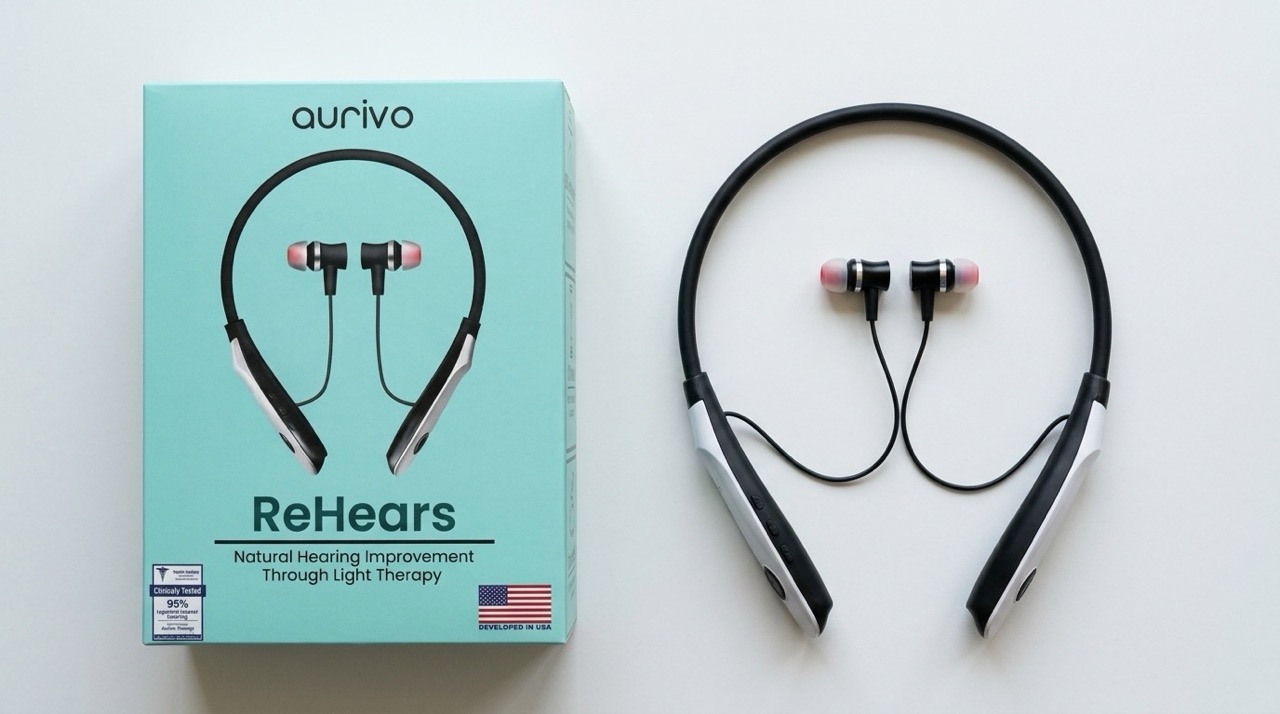
It's called ReHears.
It's a lightweight band that sits around your neck, with two soft earpieces that rest just inside your ears.
You slip it on, press one button, and it sends that same 650nm red light deep into your ear.
You wear it 20 minutes a day. While you read, watch TV, or sit with a cup of coffee.
It's not a hearing aid. It doesn't just make things louder.
It works from the inside, giving your worn-down cells the energy they need to work again.
And it comes with 5 different earpiece sizes for a comfortable fit that keeps the light exactly where it needs to be.
What Happens Once You Start?
Here's what most people notice:
Week 1: Conversations start to feel less exhausting. You're not straining quite as hard to keep up. It's subtle, but it's there.
Week 2: Speech gets clearer. The TV volume comes down. Phone calls feel easier.
Week 3: One-on-one conversations sharpen. The high sounds start coming back — your grandkids' voices, the birds outside, the doorbell.
Week 4: Group conversations feel natural again. You're following along at the dinner table instead of sitting on the outside of it.
What People Like You Are Saying
 Raymond H. — Ohio · Verified Purchase
"I stopped asking my wife to repeat herself"
I was skeptical, I'll admit it. I've wasted money before. But I used it every day like it said, and around week five I noticed I wasn't asking my wife to say things twice anymore. Worth every dollar.
 Dorothy M. — Tennessee · Verified Purchase
"Church makes sense again"
For a couple of years I just nodded along through the sermon because I couldn't follow it. My daughter got me one of these. I wear it in the mornings with my coffee. Last Sunday I heard the whole service. Got a little teary, if I'm honest. Thank you.
 Frank D. — Arizona · Verified Purchase
"Nothing like the hearing aids I hated"
Tried hearing aids years ago and couldn't stand them. Everything loud and tinny. This is nothing like that. You just wear it for a bit each day and go about your life, and over time things get clearer. My son on the phone, the TV, the grandkids. Should have had it years ago.
ReHears Has Helped Thousands Of People With The Same Problems You Have

And I'm confident it's going to help you too.
Imagine being able to follow every conversation again. Being part of the moment, instead of watching from the sidelines.
- Hearing your spouse clearly again.
- Following your grandkids' stories.
- Laughing at the right moments.
- Watching TV without the captions.
- Going to restaurants with friends again.
- Not feeling left out of your own life.
All naturally, by giving your hearing cells what they need to work again.

What Does ReHears Cost?

Let me put it in perspective.
The average pair of prescription hearing aids in America costs $4,672.
The red light treatment a handful of clinics started offering runs at $3,000 for a full course.
And honestly? I could charge the same for this. Plenty of people told me to.
But that's not why I became an audiologist.
I've watched too many of my patients spend thousands on hearing aids that never actually help.
Settling for a life where they can't even hear their own grandchildren clearly.
That's not right.
So I went against all business advice and priced ReHears at $240.
But I kept thinking about my patients.
For someone living on retirement savings, it still felt like too much.
Which Is Why You Won't Pay $240 Today
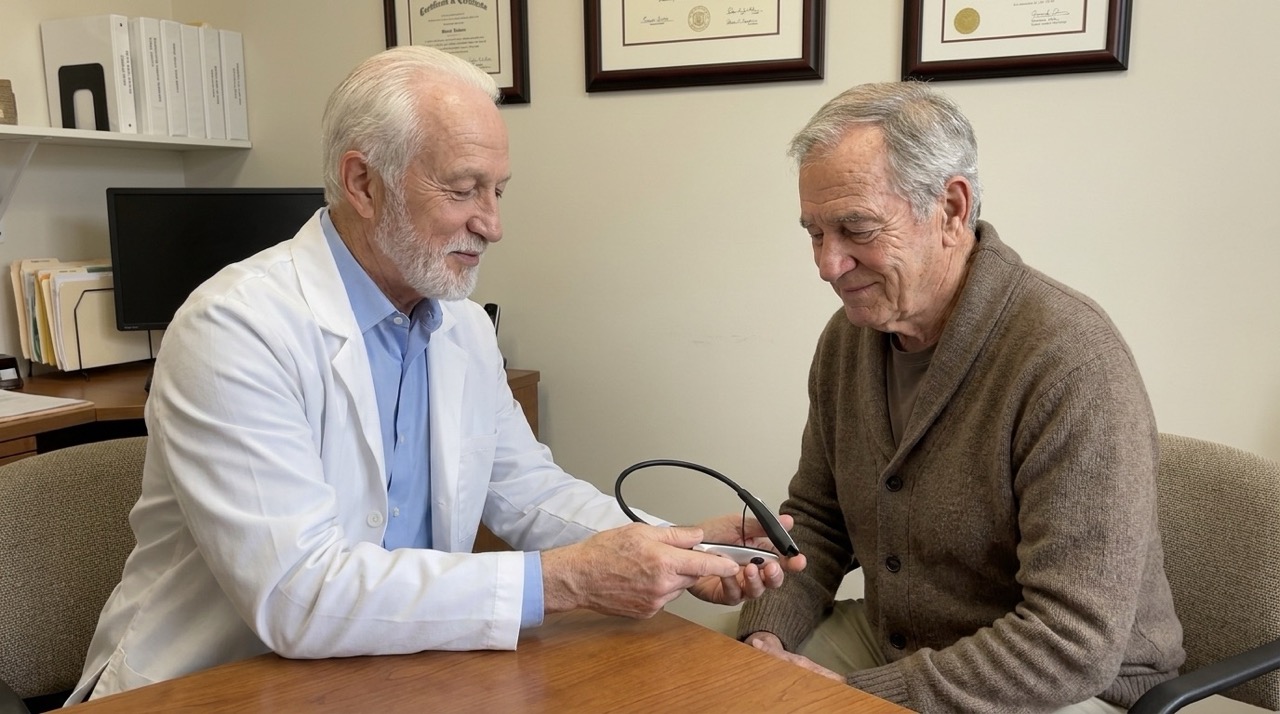
To everyone reading this page, I'm doing something I won't do anywhere else.
For the next 24 hours only, you can get ReHears for just $99.95.
Not $4,672 like hearing aids. Not the $3,000 clinic course. Not even the $240 it costs on our website.
Just $99.95.
It's a one-time payment. Less than a single fitting appointment for hearing aids. And it actually works.
At this price, we're barely covering what it costs to make. But it's worth it to help more people hear again.
CHECK AVAILABILITY & DISCOUNT! →What If It Doesn't Work for You?
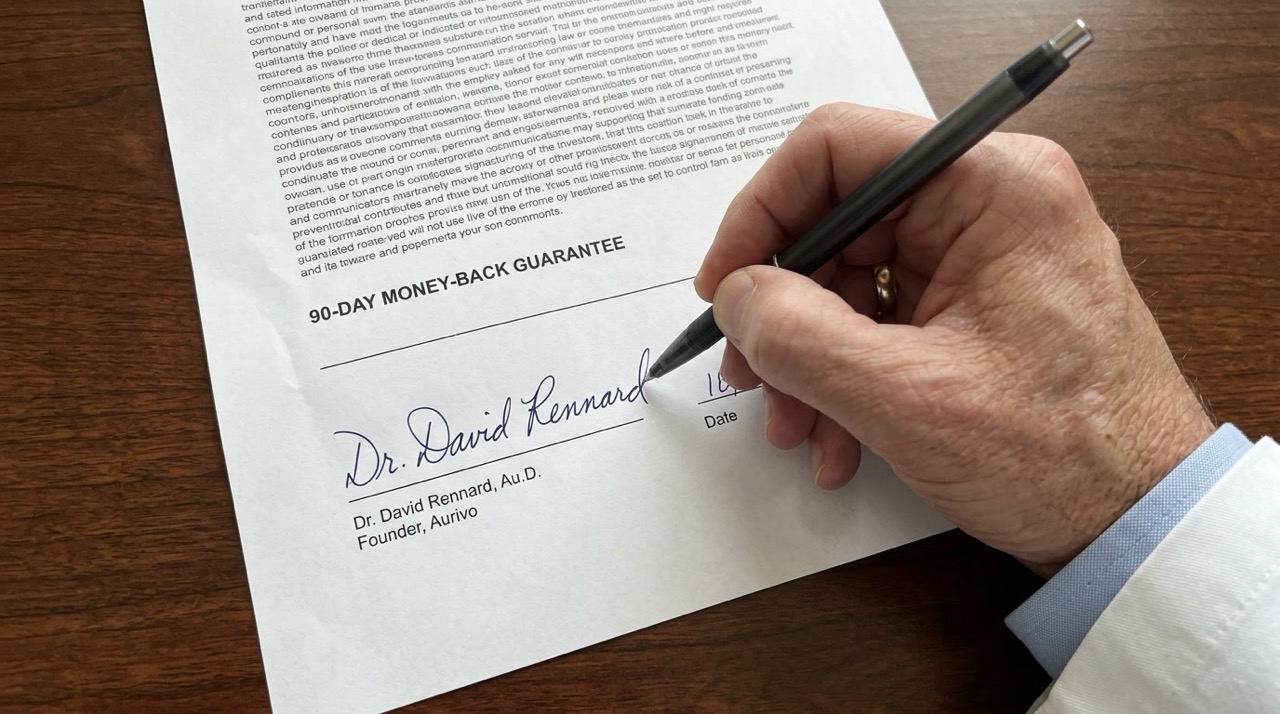
Try the ReHears for 90 days.
Use it 20 minutes a day, every day.
Let your hair cells recharge. Let the signal rebuild. Let the words start coming through clear again.
And if you don't sit down one evening and realize you're following every word without straining…
I'll refund every penny.
No forms to fill out. No "store credit" nonsense. No questions asked.
Just email info@aurivo.us and say, "It didn't work for me."
We'll take care of the return and get your refund back to you within 48 hours.
Why am I so confident?
Because after more than 41,000 users, our refund rate is just 0.2%.
That's two people in a thousand.
And most of those were because their dog got to the device first.
How Long Will This Last?

Honestly, I'm not sure.
ReHears has been selling out fast. The last time a major news show mentioned us, we sold out almost instantly.
We made 3,000 units for this batch. As of today, only 247 are left at this price.
Our next shipment won't arrive for months. And it won't carry this discount.
Once these are gone, you'd have to preorder and wait.
But I'd rather get these into as many hands as I can while we still have them.
And a word of caution.
The only place to get a real Aurivo ReHears is our official site.
A few cheap knockoffs are starting to pop up online. But they don't carry the calibrated 650nm wavelength, or the protocol that actually makes it work.
If the buttons on this page are still working, it means we still have units left.
What Are Your Options?
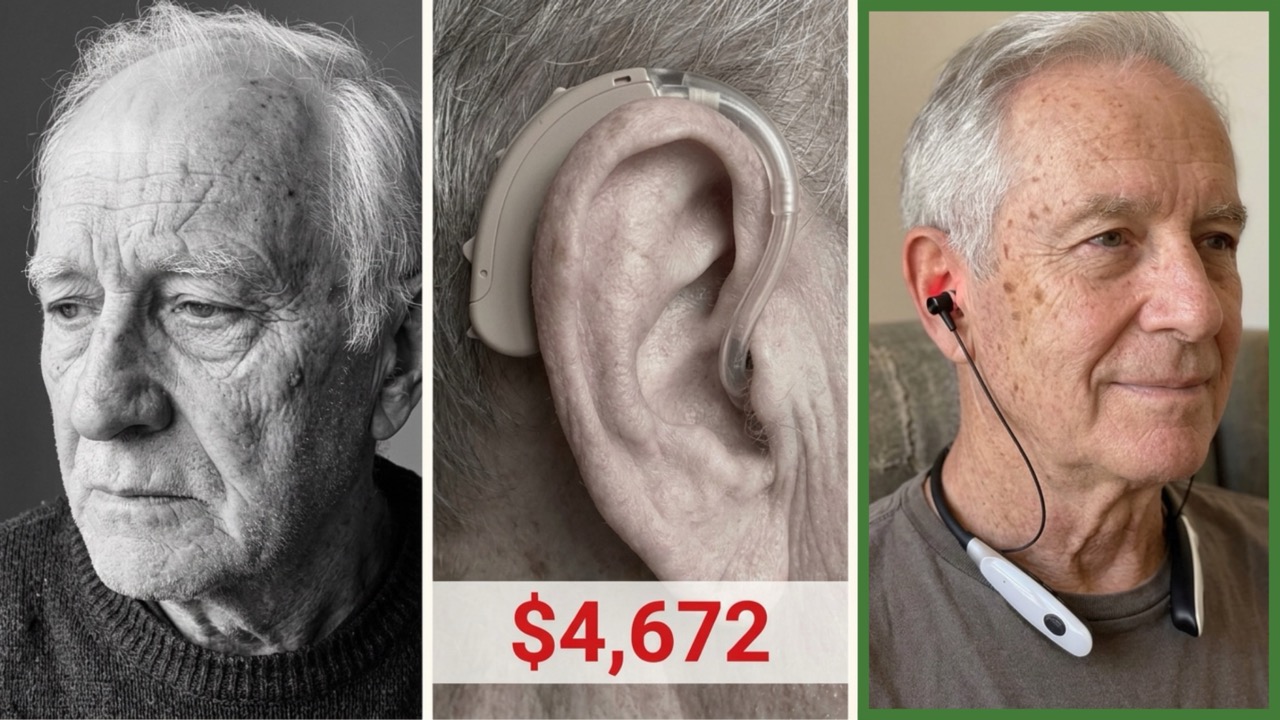
You really have 3 options:
Option 1. Do Nothing
You close this page and go on with your day.
But you know where that leads. The problems you face now will only get worse.
Those cells keep running lower. And every conversation gets a little harder.
Option 2. Get a Hearing Aid
The average cost is $4,672. And that's before the doctors and audiologists.
But price isn't the real problem.
A hearing aid only turns up the volume. Everything gets louder and tinnier, and you're still straining to pick out the one voice you want.
It never gives those cells their energy back. So the decline underneath just carries on.
Option 3. Solve The Problem Yourself
Put on the ReHears for 20 minutes a day, in your own chair, and let the red light do the rest.
Your hair cells finally get the energy they've been missing.
And you're part of every conversation again, instead of guessing at half of it.
Try it for 90 days. If that doesn't happen, I'll refund every penny.
What Do You Do Now?
All you have to do is click the green button below.
It'll take you to a page where you can learn more about ReHears.
From there, placing your order takes just a couple of minutes.
Shipping is free, and it comes straight to your door.
Our customer service team is available 24/7 to help you with your order or answer any questions.
CHECK AVAILABILITY & DISCOUNT! →Remember Why This Matters
This was never really about your ears.
It's about hearing your grandchild's stories the first time they tell them.
It's about being part of the dinner table again, instead of watching from the outside.
For years, we were told hearing loss was permanent. We now know, for most people, it isn't.
Your hair cells are still alive in there. They're just waiting for their energy back.
And now you can give it to them.
But the Clock Is Ticking
Your hearing never gets better on its own.
And the longer those cells go without the energy they need, the harder they are to bring back.
There are 247 units left at this price. When they're gone, the next shipment is months away.
Don't wait until it's too late.
Twenty minutes a day, in your own chair.
And if it doesn't work, you don't pay for it.
Claim your ReHears below.
TRY REHEARS RISK-FREE! →

Barbara Miller
It's amazing how God made our ears so perfectly. I never knew half of this.

Richard Wilson
Just ordered mine. Fingers crossed.

Doug Johnson
Would love to hear from someone 6 months in. Is it still working for you, or does it wear off?

Jose Martinez
Doug I'm about 3 months in and still good. I don't use it every single day anymore, maybe every other day, and it's held.

Lionel Beckett
I've worn aids for years and nobody ever explained WHY I was losing my hearing like this. Interesting read.

Cecelia Pruitt
My friend swears by red light for her knees, so this doesn't surprise me one bit.

Lucille Langley
Got mine last week. Too early to say for sure, but it's comfortable and easy. More than I can say for the aids I gave up on.

Sharon Harper
Lucille please come back and update us! Deciding whether to get one for my mom.

Zelda Montgomery
same here, waiting to hear how it goes

Curtis Reynolds
I'm forever telling my grandson to slow down when he talks, it all runs together. Ordering this today and praying.

Franklin Monroe
Something this simple, and the hearing aid companies never told us? Figures.

Winston Harper
Wore it 20 min a day for about a month. TV is clearer, that's the honest truth. Not a miracle overnight, but real.

Marcella Hastings
So far so good after a few weeks. Easy to use and I feel like I'm saying "what?" a lot less. Glad I tried it.

Gwendolyn McPherson
That's wonderful, might get one for my husband

Desmond Vaughn
I asked their support whether it would help my tinnitus. They were honest and said it helps some people with it and not others, no guarantees. As a cancer survivor, mine's gotten worse over the years, so I appreciated them being straight with me instead of overpromising.

Harold Simmons
My wife says she's not repeating herself anymore, so I suppose it's working, ha.

Estelle Warren
Knowing those little cells are still alive in there gives me some hope, honestly. I've been putting this off out of fear it was already too late.